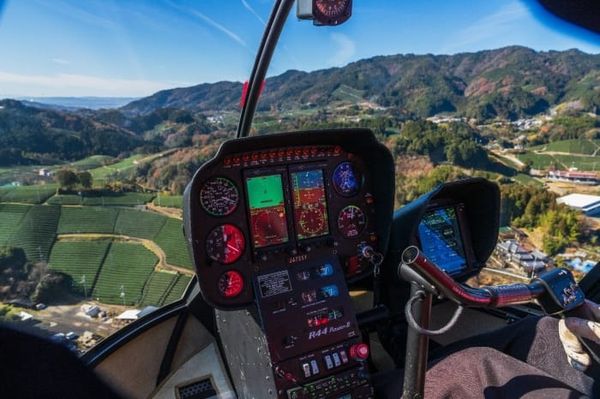
Dispersal Is Not a Compromise — It Is a Form of Luxury
Japan’s most popular destinations are increasingly becoming “amusement-park-like” in nature.
Kyoto during peak seasons, famous autumn foliage spots, and Niseko in winter remain highly attractive — but at the same time, they are experiencing extreme crowd density and increasingly standardized experiences.
As a result, the very elements that high-value travelers seek — silence, space, and authenticity — are becoming harder to access.
However, the goal is not to avoid famous destinations.
The goal is not to avoid famous destinations. It is to design experiences where space, time, and perspective are controlled.
Dispersal as Luxury
Traditionally, “dispersal” has been discussed in the context of crowd management or regional revitalization.
But today, it is taking on a new meaning.
Going where no one else is has become one of the most valuable forms of luxury.
This is not a substitute for famous destinations. It is a deliberate and intelligent choice — a redefinition of value.
Three Dimensions of Dispersal
1. Time Dispersal
The same place can offer a completely different experience depending on timing.
For example, a private early-morning temple visit, where guests can engage in meditation with a monk in complete silence.
This is not simply scheduling — it is redesigning the experience itself.
2. Geographic Dispersal
Experiencing “Kyoto” does not necessarily require staying within Kyoto city.
Nearby regions such as Shiga or Nara offer environments that are far less commercialized, while preserving a strong sense of place and aesthetic integrity.
This is not a compromise — it is a shift toward a different type of value.
3. Contextual Dispersal
Even in well-known locations, changing how the experience is accessed can fundamentally alter its meaning.
Entering through private routes, or experiencing a place with expert interpretation, can transform the same destination into something entirely different.
What matters is not the location itself, but the context in which it is experienced.
The Nature of Value
During a recent visit to a relatively unknown location, what stood out was not the place itself.
It was the absence of people. The silence. The ability to engage with the environment without interruption.
That was the true value.
Value is not determined by popularity, but by the conditions under which the experience is delivered.
Redefining Luxury
Luxury is no longer defined by where you go.
It is defined by how much control you have over space, time, and density.
Dispersal is not a compromise.
It is a strategy to create value through design.
Why it matters
Luxury is no longer about destination — it is about the conditions of the experience.
For travel companies, this means:
• Dispersal is not a compromise, but a premium strategy • Value is created by reducing density, not increasing access • The role is shifting from selecting destinations to designing experience conditions